
Painful, inflamed or recurring ingrowing toenail? We can assess the problem, relieve pressure from the nail and discuss longer-term treatment where needed.
An ingrowing toenail develops when the edge or corner of the nail presses into or penetrates the surrounding skin.
This can cause pain, inflammation and sometimes infection. The big toe is most commonly affected, although any toenail can become ingrown.
Ingrowing toenails can affect people of any age and may become increasingly uncomfortable if the nail continues to press into the surrounding skin.
Cutting the nail too short or cutting down the sides.
Naturally curved or involuted toenails.
Narrow or tight-fitting footwear.
Repeated pressure or trauma to the toe.
Treatment depends on how painful and inflamed the toe is, whether infection is present and whether the problem keeps returning.
We examine the nail and surrounding skin and discuss how long the problem has been present and any previous treatment.
Where possible, the troublesome nail edge or nail spike can be carefully removed to reduce pressure on the surrounding skin.
We can advise on nail-cutting technique, footwear and measures to reduce repeated irritation to the toe.
If the ingrowing toenail repeatedly returns or cannot be managed conservatively, nail surgery may provide a longer-term treatment option.
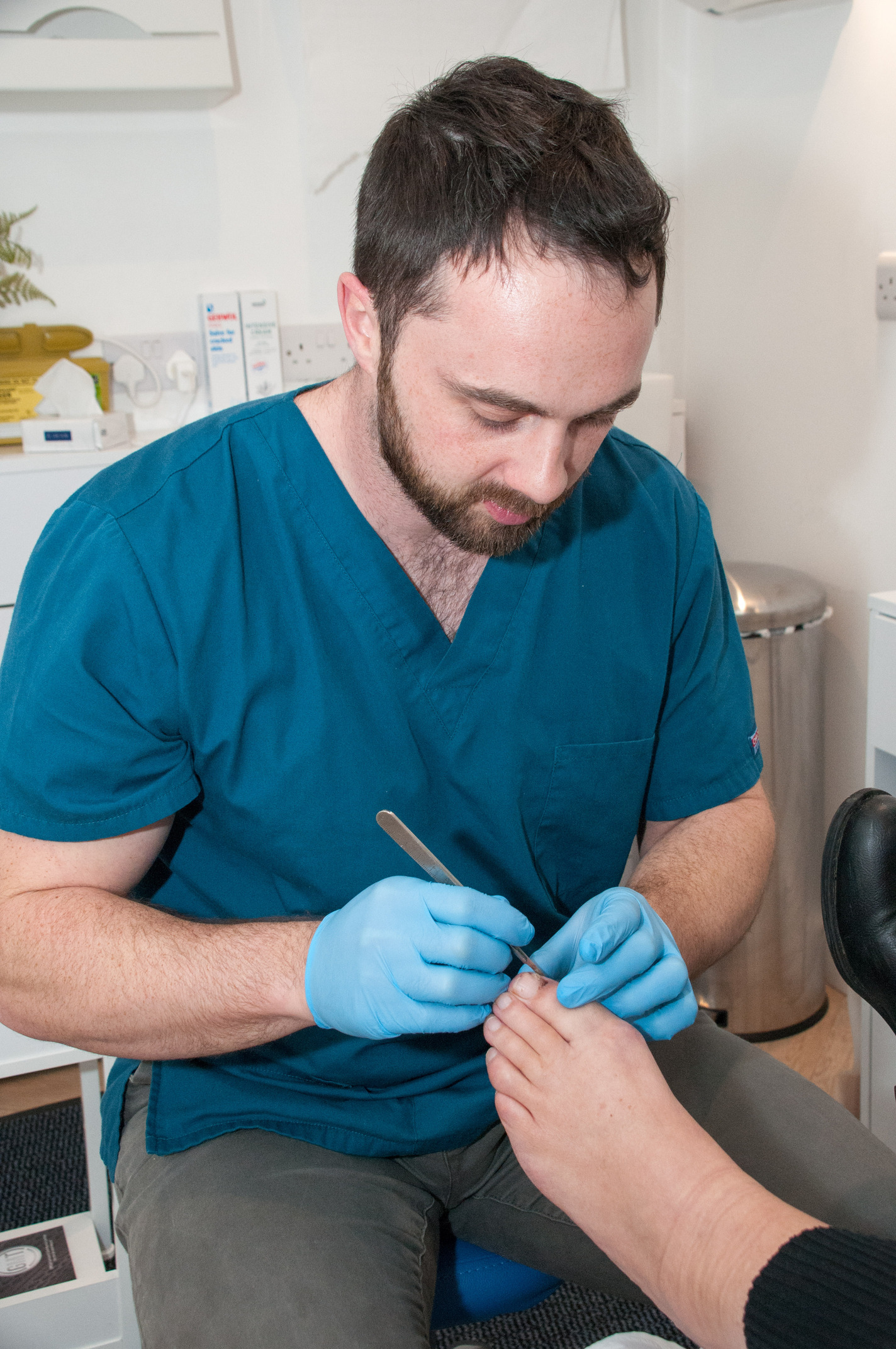
Your podiatrist will carefully assess your toenail and discuss the most appropriate treatment option for you.
Conservative treatment can often relieve the problem. If the ingrowing toenail repeatedly returns, nail surgery may be considered as a longer-term treatment option.
Antibiotics may sometimes be prescribed when infection is present, but the ingrowing nail edge itself can continue to irritate the skin.
Where appropriate, removing the nail spike or troublesome nail edge can help relieve the pressure contributing to the inflammation.
If the toe is particularly painful, local anaesthetic may be used to make treatment more comfortable.
Repeated painful episodes can sometimes mean that conservative treatment is no longer providing a lasting solution.
Nail surgery can remove the troublesome section of nail and, where appropriate, treat the nail root to reduce the chance of the problem returning.
Find out more about nail surgery →Nail surgery may be discussed if your ingrowing toenail keeps returning, remains painful or cannot be managed satisfactorily with conservative treatment.
The toe is numbed before the procedure so treatment can be carried out comfortably.
In many cases, only the troublesome section of nail needs to be removed.
Where appropriate, phenol can be applied to the nail root to reduce the chance of the problematic section regrowing.
Consider arranging an assessment if your toenail is becoming increasingly painful, inflamed or difficult to manage yourself.
Some of the questions patients commonly ask about treatment.
Mild symptoms can sometimes settle if pressure on the nail is reduced, but an embedded nail edge or nail spike may continue to irritate the surrounding skin and may require treatment.
Antibiotics are not always required. If infection is suspected, your GP or another appropriate prescriber may advise treatment. The underlying nail edge may still need to be addressed.
Treatment depends on how sensitive the toe is and what needs to be done. If required, local anaesthetic can be used to numb the toe before treatment.
Not necessarily. Many ingrowing toenails can initially be managed conservatively. Nail surgery may be discussed when the problem is recurring, persistent or cannot be managed satisfactorily without surgery.
Yes. An assessment allows us to examine the toenail, discuss your medical history and determine whether nail surgery is appropriate before arranging the procedure.
Book an assessment with Dunford Health Podiatry & Chiropody to find out which treatment option may be most appropriate for you.