
What Are Ingrown Toenails?
ingrown toenails, typically affects the big toe, occurs when the nail grows into the skin. It may appear on any toenail and, if untreated, may become infected, resulting in significant discomfort and furthur complications. Even though it might seem insignificant at first, it can interfere with everyday activities and cause a great deal of discomfort.
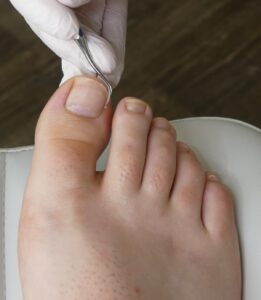
Recognising Ingrown Toenail Symptoms
signs of an ingrown toenail is important for getting treatment on time. The more quickly you see any of these signs, the more quickly you can get help to prevent your symptoms from getting worse: discomfort or pain along the nail • Swelling of the skin around the nail • Redness around the affected area • Pus or infection.

What Causes Ingrown Toenails?
You can avoid ingrown toenails by being aware of the causes. Frequent reasons for ingrown toenails include:
- Improper nail trimming may lead your nails to grow into the surrounding skin if you cut them too short or round the edges.
Tight Shoes: Placing excessive pressure on your nails
Trauma or Injury: Placing something heavy on your toe or stubbing it can change how your nails grow permananly.
Genetics: Because of inherited nail shapes, some people are more likely to develop ingrown toenails.
Repetitive stress can be exacerbated by regular sports participation or running or long term tight footwear or long term footwear that is not the right size
Who’s Most Likely to Develop Ingrown Toenails?
You could avoid ingrown toenail by being proactive and aware of risk factors.
If you fit into one or more of the following categories, you’re at greater risk than your others:
Athletes: Risk increases by engaging in sports like football or running (especially in tighter footwear).
Teenagers and Young Adults: Softened skin and nails are likely as feet in this age group tend to sweat more and teens are mor likely to pick at there nails.
Wearers of Tight Shoes: Ingrown toenails can occur if you wear tight winter shoes for extended periods of time.
Our Ingrown Toenail Treatment Options
The only advantage of ingrown toenails is that they can be easily treated. Dunford Health Clinic provides both traditional and cutting-edge medical care to meet your individual requirements.
Using non-invasive methods to treat painful and uncomfortable nails
Suggestions for shoes and nail care to avoid future outbreaks
Patients with chronic nail problems should undergo regular nail care.
Nail Surgery
With a partial nail removal, we can cut out the damaged section of the nail only while preserving the healthy nail bed for a more aesthetic appearance.
Ingrown toenails can also be completely removed by our podiatrists:
What to Expect Following Ingrown Toenail Treatment
Treatment for ingrown toenails alleviates symptoms quickly for the majority of patients. So that you can get back to your normal routine with confidence, our team will walk you through the recovery process step by step.

How to Prevent Ingrown Toenails
Prevention is preferable to treatment. Whether addressing your initial ingrown toenail or seeking to prevent future incidents, we advise the following measures to maintain foot health:
Correctly Cut Your Nails – Trim your nails following ther natural shape of the nail, avoiding nails that are too long in the corners or excessive shortening.
Select Suitable Footwear – Choose shoes featuring a spacious toe box that allows for adequate toe space, with no pressure on the sides of your nails.
Regulate Footwear Pressure – In high-impact sports such as running and hiking, making sure footwear is the correct size is very important.
Consult Our Specialists – Visit Dunford Health if you observe symptoms of an ingrown toenail or require professional guidance.
.
Contact Dunford Health Today
Ignoring the pain from an ingrown toenail will result worsening pain over time without treatment. The skilled podiatrists at Dunford Health will treat you individually in order to treat your condition as soon as possible. Contact us now to make an appointment because we’re committed to helping you get back on your feet comfortably.